Key takeaways
- •Meditation's best-proven benefits are lower stress, anxiety, and depression relapse.
- •Eight weeks of daily practice produces measurable brain and body changes.
- •Benefits extend to sleep, focus, blood pressure, pain, and emotional balance.
- •Ten to twenty minutes daily is the research-backed dose; consistency is everything.
1. Lower Stress, the Best-Proven Benefit
Stress reduction is meditation's signature effect and the most replicated finding in contemplative science. Regular practice lowers cortisol, the primary stress hormone, and dampens the reactivity of the amygdala — the brain's alarm center — while strengthening the prefrontal regions that regulate it. Practitioners do not merely feel calmer; their nervous systems measurably return to baseline faster after provocation, which is the physiological definition of resilience.
The practical meaning shows up in ordinary life: the difficult email that would have hijacked your morning now costs you two minutes; the traffic jam registers as weather rather than emergency. Studies of eight-week mindfulness programs consistently show significant reductions in perceived stress across dozens of populations — students, nurses, caregivers, executives. Of all meditation's benefits, this one arrives earliest and most reliably, often within the first two to four weeks of daily practice.
2. Reduced Anxiety
Anxiety is stress aimed at the future, and meditation addresses its machinery directly. Mindfulness practice interrupts rumination — the looping what-if thoughts that power anxiety — by training attention to disengage from thought streams and return to present-moment anchors. Meta-analyses of randomized trials show moderate anxiety reductions from mindfulness-based programs, and a landmark 2022 trial found an eight-week mindfulness program performed comparably to escitalopram, a leading anti-anxiety medication, over the study period.
Brain imaging supports the subjective reports: meditators show reduced amygdala reactivity and stronger connectivity between emotional and regulatory regions — the alarm still sounds, but the volume drops and recovery quickens. Techniques with the strongest anxiety evidence include breath-focused mindfulness, body scans, and loving-kindness practice. For acute spikes, slow breathing with extended exhales works within minutes; for baseline anxiety, the research dose is daily practice sustained over eight weeks or more.
Recommended listening
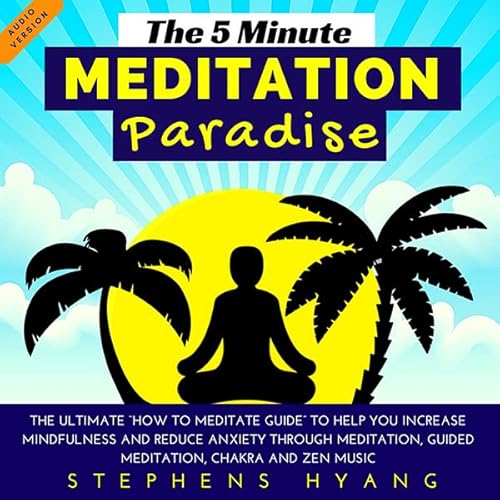
The 5 Minute Meditation Paradise
by Stephens Hyang · narrated by Robert Gazy · 6 hrs and 1 min
The Ultimate "How to Meditate Guide" to Help You Increase Mindfulness and Reduce Anxiety Through Meditation, Guided Meditation, Chakra, and Zen Music
3. Protection Against Depression
Meditation's most striking clinical benefit is in depression prevention. Mindfulness-based cognitive therapy, which combines meditation with elements of cognitive therapy, reduces the risk of depressive relapse by roughly one-third in people with recurrent depression — a result strong enough that national health guidelines in several countries recommend it as a maintenance treatment. For people currently well but prone to low mood, regular practice appears to buffer the downward spirals that precede episodes.
The mechanism is thought to be decentering: meditation trains the ability to see thoughts as mental events rather than truths. The thought I am worthless still arises, but it registers as weather passing through rather than a verdict to obey. This single shift — available to anyone through practice — weakens the rumination that converts a bad hour into a bad month. Meditation is a complement to professional care for depression, never a replacement, but as protective daily maintenance its evidence is genuinely impressive.
4. Sharper Attention and Memory
Meditation is attention training, so it is fitting that attention improvements are among its most objective benefits. Studies using computerized attention tasks find that meditators outperform controls on sustained focus, and that even brief courses — as little as four sessions in some experiments — produce measurable gains. Experienced practitioners show less activity in the default mode network, the brain's mind-wandering circuitry, meaning fewer attention lapses during demanding work.
Working memory benefits too, which matters more than it sounds: working memory is the mental workspace underlying reasoning, reading comprehension, and resisting distraction, and studies find it improves after meditation courses — in one famous trial, after just two weeks. Students and knowledge workers report the practical version: reading without re-reading, meetings without mental drift, and the recovered ability to do one thing at a time in a world engineered to fragment attention. In the attention economy, this may be meditation's most countercultural gift.
5. Better Sleep
Insomnia is often a mind problem wearing a sleep problem's clothes: the body is exhausted, but the mind replays, plans, and worries into the small hours. Meditation intervenes precisely there. Randomized trials show mindfulness programs improve sleep quality significantly — in one study of older adults, outperforming sleep hygiene education — reducing the time to fall asleep and nighttime waking while improving next-day functioning.
The mechanisms are multiple: lower baseline arousal, disengagement from rumination, and body-scan practices that release the physical tension blocking sleep's onset. Evening practice is a gentle entry point for beginners precisely because the feedback is immediate — a racing mind at bedtime is unmistakable, and so is its absence. Guided sleep meditations and slow body scans, such as the evening wind-down sessions in The 5 Minute Meditation Paradise, are designed for exactly this transition, giving the mind something calm to hold while it lets go of the day.
6. Lower Blood Pressure and Heart Health
The cardiovascular evidence is strong enough to have changed medical guidance. Multiple trials show meditation — particularly mantra-based and mindfulness practices — producing clinically meaningful reductions in blood pressure, leading the American Heart Association to conclude that meditation may be considered as an adjunct to standard hypertension treatment. Long-term practitioners in some studies show reduced rates of cardiovascular events, though this harder endpoint needs more research.
The physiology is straightforward: the relaxation response dilates blood vessels and slows the heart, and practiced daily it retrains baseline cardiovascular tone. Stress hormones that damage arteries over decades fall. For a practice that costs nothing and carries no side effects, these are remarkable findings — meditation joins the short list of lifestyle interventions, alongside exercise and diet, with real cardiovascular credentials.
7. Changed Relationship with Pain
Meditation does not eliminate chronic pain, but it demonstrably changes the experience of it — which, for pain, amounts to much the same thing. The original mindfulness-based stress reduction program was built for chronic pain patients, and four decades of studies since show consistent results: reduced pain intensity ratings, reduced pain-related distress, and improved quality of life, even when the underlying condition is unchanged.
Brain imaging reveals why: meditation uncouples the sensory dimension of pain from the evaluative one. The sensation registers, but the layers that multiply suffering — the dread, the resistance, the story of what this pain means for the future — quiet down. Meditators show reduced activity in regions that generate pain's emotional weight while sensory regions continue signaling. Pain becomes information rather than emergency. For the one in five adults living with chronic pain, this is among the most hopeful findings in all of pain research.
8. Emotional Balance and Self-Awareness
Ask long-term meditators what changed most, and they rarely mention calm — they mention space. A gap appears between trigger and response: criticism lands and, instead of instant defensiveness, there is a beat of observation before choosing how to answer. Psychologists call this decentering or reperceiving, and it may be meditation's deepest benefit, underlying many of the others. Emotions still arrive at full strength; the difference is you can see them arriving.
Self-awareness grows alongside. Regular practice develops interoception — sensitivity to the body's signals — which research links to better emotional regulation, since emotions are recognized early, while they are still whispers. Practitioners also report clearer self-knowledge: seeing their own patterns, defenses, and habits with a honesty that is occasionally uncomfortable and consistently useful. Meditation, as one teacher put it, does not make you a different person; it makes you more accurately acquainted with the person you have always been.
9. Greater Compassion and Better Relationships
Meditation's benefits do not stay inside the meditator. Loving-kindness practice in particular has been shown to increase empathy, compassion, and prosocial behavior — in one line of studies, practitioners became measurably more likely to help a stranger in need, even after brief training. Brain regions associated with empathy and emotional attunement strengthen with compassion practice, suggesting warmth is as trainable as attention.
The relational effects are what partners and families notice first: less reactivity in conflict, faster repair after arguments, more actual listening. The mechanism is simple enough — the same pause that protects you from your temper protects your relationships from it too — but the impact compounds. A calmer, more attentive person changes the emotional weather of every room they enter, which is why some therapists describe one partner's meditation practice as quietly treating the whole household.
10 to 12: Healthy Aging, Habit Change, and the Cumulative Effect
The final three benefits round out the dozen. Tenth: healthy brain aging. Long-term meditators show slower age-related gray-matter decline than matched controls, and some studies find meditation associated with longer telomeres — the cellular markers of aging — though this frontier research is still maturing. Eleventh: support for habit change. Meditation improves the self-awareness and impulse control that behavior change requires, and trials show mindfulness training roughly doubling quit rates in smoking-cessation programs compared with standard treatment.
Twelfth — and perhaps most important — is the cumulative effect itself. Meditation's benefits are not isolated; they interact. Better sleep improves emotional regulation; lower stress improves attention; attention improves relationships; and each improvement makes the next day's practice more likely. Researchers studying long-term practitioners find the differences growing with years of practice, suggesting the compound curve never really flattens. The benefit of meditation, in the end, is that it makes every other good thing a little more possible — starting tomorrow morning, ten minutes at a time.
| Benefit | Evidence strength | Typical timeline |
|---|---|---|
| Lower stress | Strong | 2-4 weeks |
| Reduced anxiety | Strong | 8 weeks |
| Depression relapse protection | Strong | 8-week program, ongoing |
| Sharper attention | Strong | 2-8 weeks |
| Better sleep | Moderate to strong | 2-6 weeks |
| Lower blood pressure | Moderate to strong | 8-12 weeks |
| Pain coping | Moderate | 8 weeks |
| Emotional balance | Moderate | Weeks to months |
| Compassion and relationships | Moderate | 7+ weeks of practice |
| Healthy brain aging | Emerging | Years of practice |
| Habit change support | Moderate | 8-12 weeks |
| Cumulative life effect | Observed in long-term studies | Compounds over years |
Separate Possible Benefits from Personal Guarantees
Meditation research reports average outcomes in particular groups, not a contract with every person who practices. A study may find improvement in a symptom score while some participants improve little or not at all. The intervention may include instruction, group support, homework, and a substantial practice schedule. Those conditions differ from casually using a short recording. A responsible answer to what are the benefits of meditation therefore includes limits: some people find it helpful for stress, attention, or emotional regulation, but the size and reliability of effects vary. The method, context, and individual matter.
Comparisons also affect the conclusion. An intervention can look beneficial when compared with no activity while showing a smaller difference against exercise, relaxation, or another active approach. This does not make it useless; it changes what can reasonably be claimed. Look for the outcome that was measured rather than assuming that a general improvement means every aspect of health changed. A better self-reported stress score is not the same as proof of disease prevention, permanent brain restructuring, or slower aging. Keeping categories distinct makes the evidence more useful and reduces pressure on readers to expect dramatic transformation.
Personal experience is valuable but has similar limits. You may feel better after a session because of the practice, a pause from work, improved sleep, the reassuring voice, or several factors together. You do not need to isolate the cause perfectly in order to keep a routine you enjoy. You should, however, avoid turning one pleasant experience into a universal claim. A fair practical question is whether meditation supports your life in observable ways over time. Look for manageable changes in attention or behavior, and remain willing to adjust the practice or choose another activity if it does not suit you.
Use Concrete Everyday Measures of Usefulness
Instead of rating yourself as calmer in general, notice a specific situation. Did you recognize an urge to interrupt and let the other person finish? Did you return to a task after distraction without opening another app? Did you notice exhaustion early enough to take a needed break? Such examples connect attention practice to ordinary functioning. They are not medical tests, and they do not prove that meditation caused every change. They simply provide a more grounded way to reflect than expecting a continuously peaceful mood. One brief note after a relevant event may be enough.
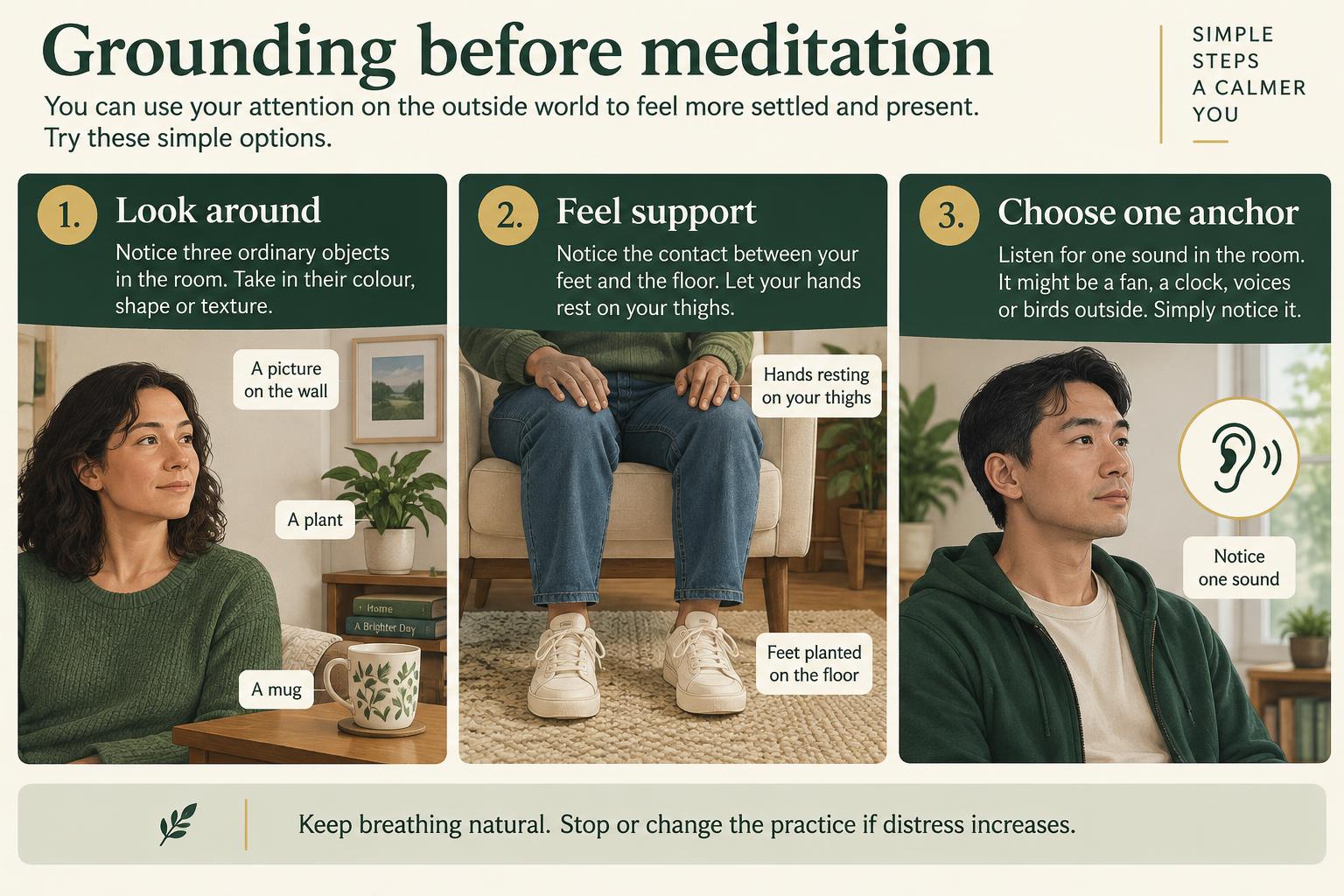
Do not require improvement after every session. A difficult day can remain difficult despite a useful practice. At the same time, do not ignore a pattern of increased distress. Meditation can sometimes bring up anxiety, upsetting memories, or a sense of disconnection. If this occurs, shorten or pause the exercise, use eyes-open external grounding, and seek appropriate guidance. Benefit should not be defined so broadly that every unpleasant experience is labeled progress. A practice that supports wellbeing should preserve your ability to respond to your needs and continue daily life, not demand that you endure symptoms without question.
If you are evaluating a health concern, involve a qualified clinician rather than relying only on informal self-tracking. Keep prescribed care in place. Some mindfulness-based programs are used in healthcare, but that does not make every meditation resource a treatment. The 5 Minute Meditation Paradise may offer a convenient guided listening option if its style suits you; its listing and sample can help you decide. It should be promoted as a practice resource, not as a guaranteed treatment for anxiety, depression, pain, or insomnia. Useful support does not require promises beyond what a commercial recording can reasonably offer.
Make Room for Other Ways to Support Wellbeing
Meditation is one option among several activities that can support a healthier routine. Sleep, movement, social connection, time outdoors, enjoyable activities, and appropriate care all matter. If a short walk helps you more than seated practice, that is useful information rather than a failure to understand meditation. If you enjoy guided listening, keep it alongside those other supports. Avoid treating the practice as an obligation that must solve every problem before you are allowed to try something else. A balanced routine is more realistic than relying on one technique to compensate for ongoing exhaustion, isolation, or an unmanageable workload.
Choose a modest experiment with a clear purpose. You might use a short attention practice before beginning work and observe whether it helps you start deliberately. Keep the setup simple and review the fit after a reasonable trial. If the routine is helpful, continue without needing to add time indefinitely. If it is not, change one aspect or stop. The answer to the benefits question is strongest when it remains both hopeful and honest: meditation can be useful for some people, but outcomes vary, limits matter, and your experience deserves to be considered alongside evidence rather than forced to match a promise.
Start listening today
The 5 Minute Meditation Paradise
by Stephens Hyang · narrated by Robert Gazy · 6 hrs and 1 min
The Ultimate "How to Meditate Guide" to Help You Increase Mindfulness and Reduce Anxiety Through Meditation, Guided Meditation, Chakra, and Zen Music
Frequently asked questions
What is the main benefit of meditation?
Stress reduction is the strongest and most reliable benefit, confirmed across hundreds of studies. Regular practice lowers cortisol, calms the amygdala's threat response, and speeds recovery after stress — with most people noticing effects within two to four weeks of daily practice.
How much meditation do I need to get the benefits?
Research programs producing significant benefits typically use ten to twenty minutes daily over about eight weeks. Even five minutes daily reduces acute stress, and longer sessions deepen results — but consistency matters far more than duration at every stage.
Are the benefits of meditation scientifically proven?
Many are. Stress, anxiety, depression relapse prevention, attention, and sleep have strong evidence from randomized controlled trials. Blood pressure and pain coping have moderate-to-strong support. Claims about aging and cellular health are promising but still emerging.
Can meditation replace medication or therapy?
No. Meditation is a powerful complement to medical and psychological care — some studies show comparable effects to medication for anxiety — but it should not replace prescribed treatment. Consult your doctor before changing any treatment plan.
Do the benefits of meditation last?
Benefits persist as long as practice continues and compound over years — long-term meditators show growing differences in brain structure and stress resilience. Benefits fade gradually when practice stops, which is why building a sustainable daily habit matters more than any intensive burst.
Twelve benefits, one requirement: practice. Ten minutes tomorrow morning starts the compounding — calmer stress response, sharper attention, better sleep, and the quiet rewiring of how you meet your life. Begin with The 5 Minute Meditation Paradise if you want gentle guidance; the benefits do not care how you start, only that you do.


