Key takeaways
- •All meditation techniques train the same skill: noticing distraction and returning attention with kindness.
- •Breath awareness and guided meditation are the easiest entry points for complete beginners.
- •Matching the technique to your goal — calm, focus, sleep, or emotional balance — improves consistency.
- •Short daily sessions of five to ten minutes outperform occasional long sessions for building the habit.
What Makes a Meditation Technique Work?
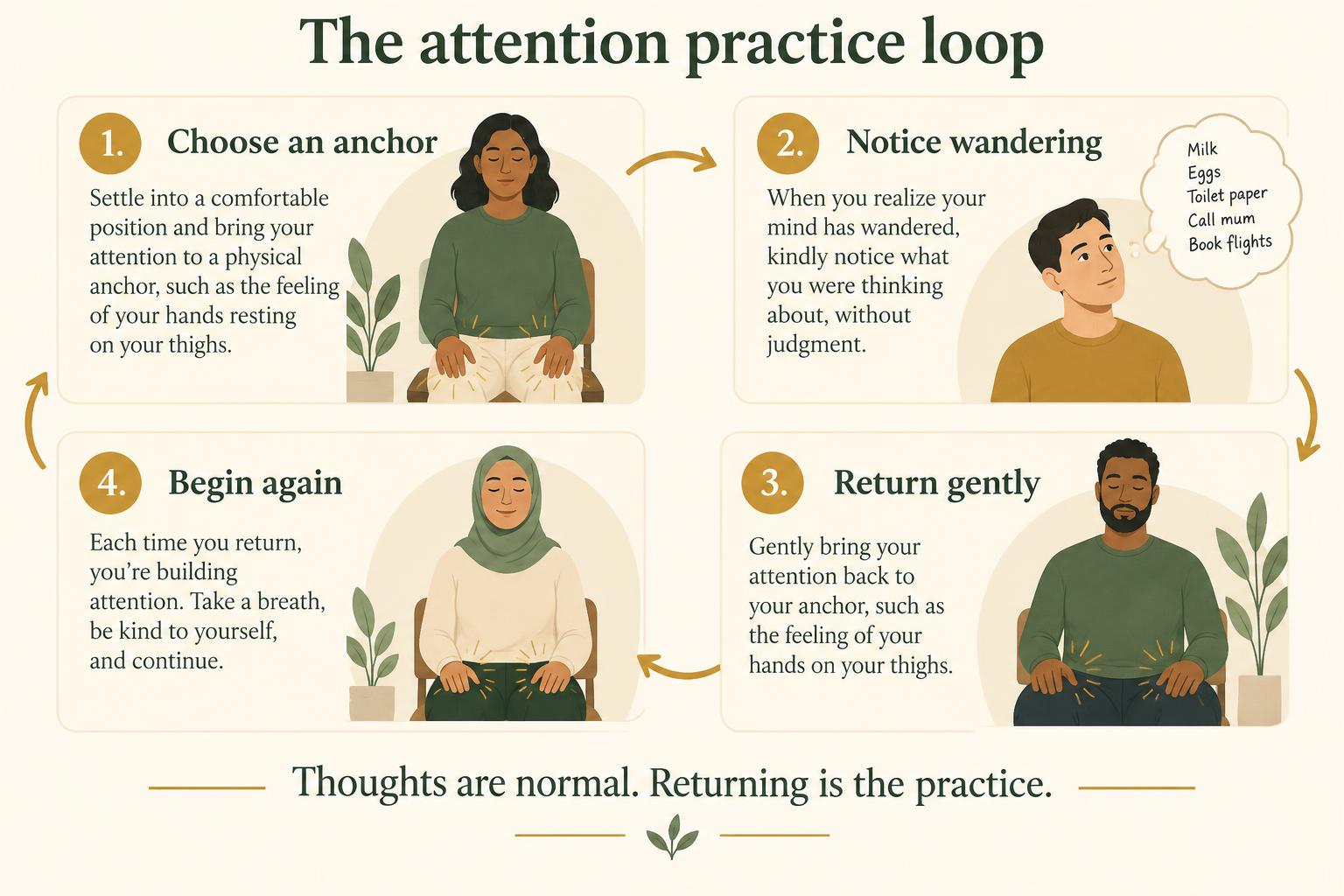
Every meditation technique, ancient or modern, rests on a simple loop. You choose an object of attention — the breath, a phrase, bodily sensation, a sound, or an image. You hold attention there. Sooner or later the mind wanders into planning, remembering, or worrying. You notice the wandering, and you return. That return is the rep, the mental equivalent of one bicep curl. Researchers call this process attention training, and brain imaging studies show that regular practice strengthens networks involved in focus while quieting the default mode network, the circuitry behind rumination and self-criticism.
This is why no technique works by magic and none requires special talent. What differs between methods is the anchor they use and the mental muscles they emphasize. Concentration techniques build stability. Open-awareness techniques build equanimity. Heart-centered techniques build warmth toward yourself and others. Understanding this shared mechanism frees you from searching for a perfect method and lets you evaluate techniques by a practical question: does this anchor feel steady enough that I will return to it tomorrow?
Breath Awareness Meditation
Breath awareness is the foundation of most meditation traditions and the most studied technique in clinical research. You sit comfortably, close your eyes or soften your gaze, and rest attention on the physical sensations of breathing — the cool air at the nostrils, the rise of the chest, or the expansion of the belly. When thoughts pull you away, you label them softly as thinking and come back to the next breath. Counting breaths from one to ten and starting over is a classic variation that gives busy minds extra structure.
The breath is an ideal anchor because it is always present, always changing, and intimately connected to the nervous system. Slow, deliberate breathing activates the parasympathetic response, lowering heart rate and blood pressure within minutes. That is why breath-focused practice appears in nearly every evidence-based program, from mindfulness-based stress reduction to modern apps. If you only ever learn one of the meditation techniques in this guide, make it this one — it travels with you everywhere, requires nothing, and scales from a sixty-second reset to an hour of deep practice.
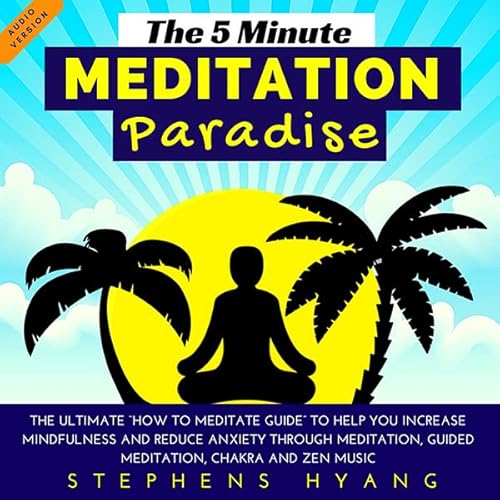
Recommended listening
The 5 Minute Meditation Paradise
by Stephens Hyang · narrated by Robert Gazy · 6 hrs and 1 min
The Ultimate "How to Meditate Guide" to Help You Increase Mindfulness and Reduce Anxiety Through Meditation, Guided Meditation, Chakra, and Zen Music
Body Scan Meditation
The body scan moves attention systematically through the body, usually from the feet up to the crown of the head. You rest awareness on each region — toes, soles, calves, knees, thighs, and so on — noticing warmth, pressure, tingling, tension, or the absence of sensation without trying to change anything. A full scan takes twenty to forty-five minutes, but a five-minute version that visits only the feet, hands, shoulders, and face works surprisingly well as a midday reset.
This technique is especially valuable for people who live in their heads. Chronic stress pulls attention into abstract worry, and the body scan reverses that drift by anchoring awareness in direct physical experience. It is a staple of mindfulness-based stress reduction programs for chronic pain and insomnia, and many people find a lying-down body scan at night more effective than counting sheep. The main pitfall is sleepiness; if you keep drifting off, practice earlier in the day or keep the eyes half open.
Mantra and Transcendental Techniques
Mantra meditation gives the mind a word or phrase to repeat, either silently or aloud. Traditional Sanskrit mantras like Om or So Hum are common, but any meaningful word works — peace, calm, or let go. The repetition occupies the verbal channel of the mind, leaving less room for anxious self-talk. Transcendental Meditation, the most famous mantra system, assigns a personalized sound and is practiced for twenty minutes twice daily, always with eyes closed and without effortful concentration.
Research on mantra-based practice shows measurable reductions in anxiety, blood pressure, and symptoms of post-traumatic stress, with effect sizes comparable to mindfulness approaches. The appeal is structural simplicity: there is nothing to visualize, track, or analyze. You sit, you repeat, you notice drifting, you resume. People who find breath awareness too subtle often thrive with a mantra because the phrase gives attention something definite to hold. The trade-off is that silent repetition can feel mechanical at first; give it two honest weeks before judging.
Loving-Kindness Meditation
Loving-kindness practice, called metta in the Buddhist tradition, cultivates goodwill through silent phrases directed at yourself and others. You begin by wishing yourself well — may I be safe, may I be healthy, may I be at ease — then extend the same wishes to a loved one, a neutral person, a difficult person, and finally all beings. The point is not to manufacture emotion but to orient the heart toward friendliness, letting feeling follow intention over time.
This is the best-supported technique for softening self-criticism and social anxiety. Studies show that seven weeks of loving-kindness practice increases positive emotions, empathy, and even vagal tone, a marker of physiological calm. It pairs beautifully with breath awareness: many practitioners open a session with five minutes of breathing, then shift into phrases. If the traditional wording feels awkward, rewrite it in your own voice. The phrases are scaffolding, not scripture — what matters is the sincerity of the wish behind them.
Visualization and Guided Imagery
Visualization techniques ask you to build a vivid inner scene — a quiet beach, a mountain lake, light filling the body — and rest attention inside the sensory detail of that scene. Because the imagination is engaged, visualization holds the attention of people who find stillness-based methods frustrating. It is also the format behind most recorded guided meditation, where a narrator leads you through imagery while music plays underneath.
For beginners, guided sessions remove the two biggest obstacles: uncertainty about what to do and the silence that amplifies a busy mind. This is exactly why we recommend The 5 Minute Meditation Paradise by Stephens Hyang, narrated by Robert Gazy, to new meditators. Over six hours, it walks you through mindfulness, guided meditation, chakra, and zen music sessions in short five-minute formats, so you can sample several meditation techniques without committing to long sits. Think of it as a tasting menu for your practice — once you discover which style resonates, you can go deeper with confidence.
Movement-Based Meditation Techniques
Meditation does not require stillness. Walking meditation slows each step to half speed and synchronizes attention with lifting, moving, and placing the foot. Yoga links postures to breath so that movement itself becomes the anchor. Qigong and tai chi use flowing sequences to cultivate what Chinese traditions call moving stillness. These methods share one principle: deliberate, unhurried movement keeps attention in the body and the present moment.
Movement-based techniques are a lifeline for restless people. If sitting for ten minutes feels like torture, do not force it — walk. A ten-minute mindful walk around the block delivers the same attention-training loop as seated practice, with the added benefits of light exercise and fresh air. Many experienced meditators alternate: seated breath work in the morning, a mindful walk at lunch. The habit survives because it adapts to the energy of the day rather than demanding the same conditions every time.
Comparing the Core Meditation Techniques
With so many legitimate options, a side-by-side view helps you shortlist two or three methods to test. Use the comparison below as a starting point, not a verdict — your own experience during a two-week trial matters more than any table.
A practical approach is to run short experiments. Practice one technique daily for two weeks, rate your calm and focus afterward on a simple one-to-ten scale, then switch. Within a month or two you will know which anchor your mind returns to most willingly, and that willingness is the strongest predictor of a practice that lasts years rather than days.
| Technique | Primary anchor | Best for | Difficulty |
|---|---|---|---|
| Breath awareness | Physical breath sensations | Beginners, stress relief | Easy |
| Body scan | Systematic bodily sensation | Insomnia, chronic tension | Easy |
| Mantra repetition | Silently repeated word | Busy, analytical minds | Easy |
| Loving-kindness | Phrases of goodwill | Self-criticism, relationships | Moderate |
| Visualization | Imagined scene or light | Restless imaginations | Easy |
| Mindfulness of thoughts | Observing thoughts as events | Rumination, anxiety | Moderate |
| Walking meditation | Sensation of each step | People who dislike sitting | Easy |
| Zen (zazen) | Posture and open awareness | Experienced practitioners | Challenging |
| Sound meditation | Music, bowls, ambient tone | Evening wind-down | Easy |
| Noting practice | Mental labels for experience | Overthinking, clarity | Moderate |
How to Choose the Right Technique for You
Start from your goal. If your primary aim is calming a racing mind, breath awareness or mantra repetition gives the fastest relief. If you carry stress in your shoulders and jaw, the body scan will feel like it was designed for you. If your inner critic is loud, loving-kindness addresses it directly. If you simply cannot sit still, walking meditation removes the obstacle entirely. Goals change over time, and your technique can change with them — nothing about experimentation is a betrayal of practice.
Second, consider your learning style. People who like clear instructions thrive with guided audio; people who prefer silence and autonomy do better with a timer and a simple anchor. Third, be honest about schedule. A technique you can practice in five minutes beats an ideal method you never find time for. Short guided sessions such as those in The 5 Minute Meditation Paradise are built around this reality, packaging chakra work, mindfulness, and zen music into blocks that fit between meetings or before bed.
Building a Daily Practice That Sticks
Technique matters far less than repetition. The research is unambiguous: benefits track with total minutes practiced, and daily short sessions beat sporadic long ones. Attach your practice to an existing habit — after morning coffee, before lunch, or right after brushing your teeth at night. Keep the barrier comically low for the first month: five minutes counts, and five minutes done beats twenty minutes skipped.
Expect the arc of motivation to dip around week two, when novelty fades and the mind starts negotiating. This is normal and temporary. Prepare for it by laying out your cushion the night before, queuing your guided session, and tracking streaks on a calendar you actually see. Within six to eight weeks, most people report the practice shifting from chore to refuge — something they protect rather than postpone. That shift, not any particular technique, is what transforms meditation from an experiment into a lifelong resource.
Three More Techniques: Sound, Noting, and Open Awareness
Sound meditation starts with listening rather than controlling your environment. Sit near an open window or in an ordinary room and notice the nearest sound, then the most distant one. Let a car, a bird, or a refrigerator hum arrive and disappear. You are not identifying every source or deciding whether the sound is pleasant. You are noticing hearing itself. If you become absorbed in a story about a noisy neighbor, recognize the story and return to listening. This can be a useful alternative when concentrating on breathing feels uncomfortable. Keep the volume of recorded sound low enough that you can still hear your surroundings.
Noting practice adds a light mental label to whatever captures attention. You might silently say hearing, warmth, planning, or remembering, then release the label. Use ordinary words and avoid a running commentary. The purpose is to distinguish an experience from the story that grows around it: a thought about tomorrow can be recognized as planning rather than treated as an urgent instruction. Beginners can try one minute of noting after a few minutes with a steady anchor. If naming everything becomes tiring, simplify to thinking and feeling, or drop the labels altogether. Precision matters less than an unhurried willingness to notice.
Open awareness broadens the field beyond a single object. After settling, allow sounds, sensations, thoughts, and moods to appear without deliberately chasing any of them. This is not the same as drifting through a daydream: you remain aware that experience is changing. When awareness becomes vague, return briefly to contact with the chair or the sensation of a natural breath. There is no universal timetable for attempting this style, but a familiar anchor gives you a useful fallback. These three approaches complete the twelve methods named in this guide while illustrating an important distinction: attention can be trained through listening, gentle labeling, or a wider receptive awareness.
A Technique Trial You Can Actually Evaluate
Imagine that you have ten minutes available after lunch and want less mental carryover between meetings. On the first few days, spend five minutes noticing breathing and a minute observing how you transition back to work. On another week, try walking slowly along the same quiet stretch. Keep the approximate time and length consistent so that you are not comparing a peaceful Sunday with a difficult Monday. Record one practical observation rather than grading your whole personality: did you reopen your email immediately, or could you finish one task before switching? This informal experiment cannot establish a medical effect, but it can reveal which practice fits your actual life.
Change a technique when there is a useful reason, not whenever a session feels ordinary. A stiff knee might justify moving from floor sitting to a chair. Anxiety around internal sensations might suggest an external sound anchor. Persistent boredom might call for more curiosity, a shorter session, or help from a teacher rather than an entirely new method. If you try The 5 Minute Meditation Paradise, use a sample or a clearly labeled passage to explore the narrator's pacing before choosing it as a regular companion. Guided audio offers structure, but neither the recording nor the technique can promise a particular outcome. The strongest starting point is a method you can approach safely, comfortably, and without turning practice into another performance test.
Start listening today
The 5 Minute Meditation Paradise
by Stephens Hyang · narrated by Robert Gazy · 6 hrs and 1 min
The Ultimate "How to Meditate Guide" to Help You Increase Mindfulness and Reduce Anxiety Through Meditation, Guided Meditation, Chakra, and Zen Music
Frequently asked questions
Which meditation technique is best for beginners?
Breath awareness and guided meditation are the most beginner-friendly techniques. Both give attention a clear, simple anchor and require no prior knowledge. Start with five minutes a day, and consider a guided audio program so a narrator can pace the session while you learn the basic loop of noticing and returning.
How long should I practice a technique before switching?
Give each technique at least two weeks of daily practice before judging it. The first few sessions of any method feel awkward because the skill of noticing distraction is still developing. After two weeks, compare how you feel before and after sessions and keep the method you return to most willingly.
Can I combine different meditation techniques?
Yes, combining techniques is common and often helpful. Many practitioners open with a few minutes of breath awareness to settle the mind, then shift into loving-kindness phrases or a body scan. The only caution is for complete beginners, who may benefit from mastering one anchor before layering others.
Is guided meditation a real technique or just relaxation?
Guided meditation is a delivery format, not a lesser technique. A narrator leads you through the same attention training used in silent practice — breath work, body scans, visualization, or loving-kindness. Studies show guided sessions produce comparable reductions in stress and anxiety, especially for beginners who struggle with unstructured silence.
What is the hardest meditation technique to learn?
Open-awareness styles such as zen shikantaza and choiceless awareness are generally the most demanding because they remove the anchor entirely and ask you to rest in pure observation. Most teachers recommend building six months to a year of stability with breath or mantra practice before attempting them.
You do not need to master all twelve meditation techniques — you need one you will practice tomorrow morning. Pick the method from this guide that felt most inviting, set a five-minute timer, and begin. If you want a gentle, structured start, press play on The 5 Minute Meditation Paradise and let Robert Gazy's narration carry you through your first week. Small sessions, repeated daily, will quietly reorganize how your mind meets the world.


