Key takeaways
- •Start with slow exhales and external anchors — safety before depth.
- •Five gentle minutes daily outperform long, intense sessions for anxious minds.
- •Guided audio removes the silence where anxiety spirals.
- •Feeling some anxiety during practice is normal and workable, not failure.
Why Anxiety Needs a Different Starting Approach
Standard meditation advice — sit in silence, close your eyes, watch your inner world — assumes a nervous system calm enough to tolerate that inward turn. Anxiety changes the equation. For an anxious person, silence can amplify the mental noise, closed eyes can feel unsafe, and attention turned inward can land directly on the racing heart and tight chest, feeding the very alarm the practice is meant to soothe. None of this means meditation is wrong for anxiety; the research clearly shows it helps. It means the entry ramp must be gentler.
The principles are simple: shorter sessions, external anchors before internal ones, eyes open as an option, guidance instead of silence, and permission to stop anytime. Think of it as exposure therapy for stillness — you approach quiet in doses small enough that your nervous system learns, session by session, that sitting still is survivable. Given that learning, the deeper benefits of practice become available. Skipping this ramp is the main reason anxious beginners conclude meditation is not for them, usually one bad session before it would have started working.
Setting Up: Safety First
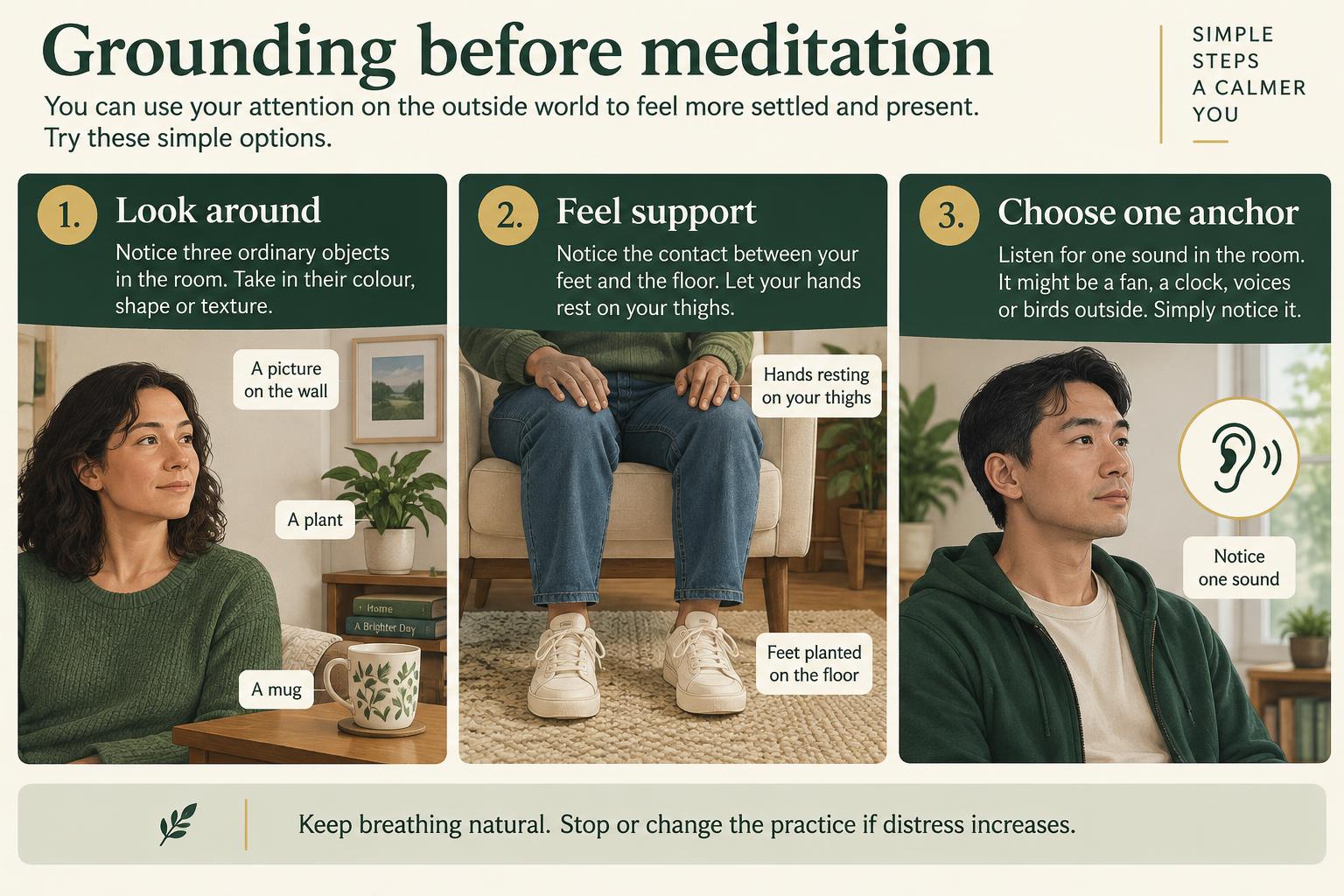
Before technique comes environment. Choose a space where you feel genuinely secure — for most people that is home, with the option of light rather than darkness. Sit in a comfortable chair with your feet flat on the floor; the contact points matter, because they become your emergency anchors. Keep your eyes open or softly closed, whichever feels safer — open eyes with a lowered gaze work perfectly well and are the better choice if closing them raises your heart rate.
Set a timer for five minutes — not ten, not twenty — and place a glass of water nearby as a small signal of self-care. Have an exit plan and tell it to yourself explicitly: if this becomes too much, I will open my eyes, feel my feet, and stop, and that will be a success, not a failure. Paradoxically, knowing you can stop is usually what makes it possible to continue. The nervous system relaxes when the exits are visible.
Recommended listening
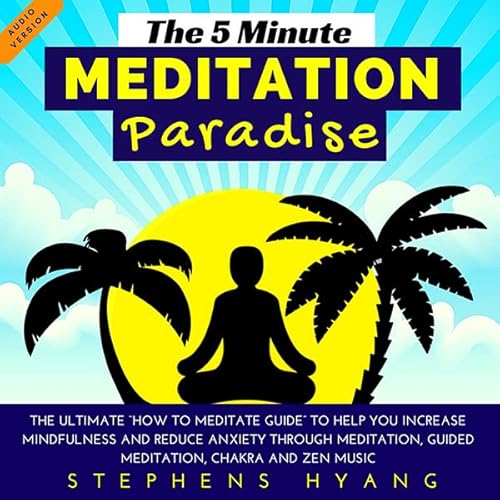
The 5 Minute Meditation Paradise
by Stephens Hyang · narrated by Robert Gazy · 6 hrs and 1 min
The Ultimate "How to Meditate Guide" to Help You Increase Mindfulness and Reduce Anxiety Through Meditation, Guided Meditation, Chakra, and Zen Music
The Core Practice: Long Exhales
The single most effective technique for anxious meditation is breathing with an extended exhale. Inhale gently through the nose for a count of four. Exhale slowly — through pursed lips if that helps control the pace — for a count of six. The exhale is the active ingredient: long exhales stimulate the vagus nerve, directly dialing down the fight-or-flight response. Heart rate follows within a minute. Continue at this gentle rhythm for your five minutes, letting the counting occupy the part of your mind that would otherwise be scanning for threats.
Keep the breath gentle. The instinct under anxiety is to breathe deeply and forcefully, which can trigger light-headedness and — in sensitive people — more anxiety. Think small and slow rather than big and deep. If counting itself feels stressful, drop the numbers and simply make each out-breath a little longer than the in-breath, like a quiet sigh of relief repeated. Two weeks of daily practice with this pattern measurably lowers baseline anxiety for most people, so future spikes start from a calmer floor.
Anchoring Outside the Body
For many anxious people, the body is where the alarm lives — the pounding heart, the tight throat — so early practice works better anchored outside it. Sound is the gentlest external anchor: sit and simply receive the sounds around you, near and far, without naming or judging them. Listening is inherently outward-facing, which gives the mind somewhere to rest that is not the worry loop and not the body's alarm signals.
The feet are the exception to the avoid-the-body rule, because they are about as far from the anxious chest and head as attention can go. Feeling the soles of your feet against the floor — pressure, warmth, texture — is grounding in the most literal sense, and it is the anchor to return to whenever practice tips toward overwhelm. Between sounds and feet, you have two completely safe harbors. Build your early sessions from these before venturing toward breath or body scans, and let comfort, not ambition, set the timeline for moving inward.
When Anxiety Shows Up Mid-Session
Sooner or later, anxiety will arrive during practice — and handled well, this becomes the most valuable training of all. The protocol is called surfing the wave. First, acknowledge it plainly: anxiety is here. Naming converts a vague threat into an observed event. Second, locate it in the body and give it permission to be there — tight chest, allowed; fluttering stomach, allowed. Resistance feeds anxiety; allowance starves it. Third, breathe with it, directing the slow exhale toward the sensation as if breathing around it, giving it room rather than trying to evict it.
Fourth — and this is the step that makes everything else possible — return to your anchor when you can, but without forcing it. Ride between anchor and sensation like a surfer adjusting to each wave. If the wave ever becomes too big, deploy the exit plan without hesitation: eyes open, feet felt, session paused. Every time you stay with mild anxiety and watch it crest and subside — which it always does — your nervous system records the most important lesson meditation teaches: this feeling is survivable, and it passes. That lesson, repeated, is what gradually turns the alarm down.
Guided Meditation: The Anxious Beginner's Best Friend
For anxiety specifically, guided meditation is not a shortcut — it is the recommended starting format. A calm, steady voice occupies the auditory channel that anxious rumination depends on, provides continuous structure so you are never wondering what to do, and normalizes everything you experience. The anxious mind's favorite question — am I doing this wrong? — is answered every few seconds by the simple fact of continued guidance.
Choose recordings carefully: unhurried pacing, a warm and steady narrator, gentle music underneath, and lengths of five to ten minutes. Programs designed around short, soothing sessions are ideal; The 5 Minute Meditation Paradise, narrated by Robert Gazy, pairs five-minute guided practices with zen music, which many anxious listeners find easier to settle into than either silence or longer recordings. Use guided sessions as your primary practice for the first month or two. Silent practice can come later, built on the safety the guided months established.
Your Eight-Week Anxiety Meditation Plan
A gradual plan converts good intentions into a nervous system that actually calms down. Weeks one and two: five minutes daily of long-exhale breathing, eyes open or closed as preferred, anchored also on sounds when breathing feels hard. Weeks three and four: six to eight minutes, adding feet-on-floor grounding and one guided session per day. Weeks five and six: eight to ten minutes, gently introducing breath awareness at the nostrils — the first inward anchor — while keeping the exit plan live. Weeks seven and eight: ten minutes, alternating guided and unguided days, plus one in-the-moment practice daily when anxiety appears in ordinary life.
Track two numbers weekly: your sessions completed and a one-to-ten rating of your average anxiety. Expect the session count to matter more than the ratings at first — the research timeline for significant anxiety reduction is around eight weeks of daily practice, and some people need longer. Meditation works alongside therapy and medication, not instead of them; if your anxiety is severe, loop in a professional and let practice be one leg of a larger table. The goal is not to become someone who never feels anxiety. It is to become someone anxiety no longer runs.
| Weeks | Daily session | Anchors | Milestone |
|---|---|---|---|
| 1-2 | 5 minutes | Long exhales, sounds | Practice feels safe enough to repeat |
| 3-4 | 6-8 minutes | Add feet-on-floor grounding | Comfort with stillness grows |
| 5-6 | 8-10 minutes | Introduce gentle breath awareness | First inward anchor tolerated |
| 7-8 | 10 minutes | Alternate guided and silent | Calmer baseline, usable in-the-moment tools |
Start with Orientation Before Turning Inward
For an anxious beginner, an instruction to close the eyes and concentrate on internal sensations may feel too abrupt. Start by noticing where you are. Look at three ordinary objects, feel the support beneath your feet, and register a familiar sound. Keep your gaze open if that helps you remain present. This orientation is not a test to complete perfectly. It gives you a few external points of reference before choosing an anchor. You may decide to stay with those points for the entire session. Inward attention is optional, and meditation does not become less valid because you choose hearing or contact with the floor.
When you choose an anchor, keep it neutral and manageable. The pressure of shoes, the texture of a sleeve, or a steady background sound may be easier than a heartbeat or breath. If you do attend to breathing, let it remain natural. There is no need to inhale deeply, hold the breath, or enforce a long exhalation. Structured breathing can be useful for some people, but it can also encourage monitoring or uncomfortable sensations. The aim here is attention, not a forced physiological change. If the breath becomes the subject of anxious checking, gently switch to something outside the body.
Acknowledge worry with a short phrase rather than debating it during the session. Worrying is here can be enough. Then return to the chosen anchor. Some concerns require real action, but that action can be planned after the brief practice. If an urgent issue needs attention now, address it rather than using meditation to avoid it. The exercise is intended to create a little choice in how you respond, not to convince you that every fear is unfounded. Anxiety may remain present while you take a sensible next step. You do not have to eliminate the feeling before you are allowed to continue your day.
Plan What to Do If Anxiety Increases
Decide on a stop rule before beginning. If you become increasingly dizzy, overwhelmed, disconnected, or caught in upsetting memories, open your eyes and return to the room. Move your hands, stand when safe, or speak with someone you trust. Stop the recording if one is playing. You do not need to wait for the timer or prove that you can stay with distress. A clear plan reduces the pressure to improvise while anxious. It also distinguishes practice from endurance. The goal is a manageable skill that supports daily functioning, not a requirement to expose yourself to sensations without appropriate support.
If anxiety repeatedly escalates during meditation, seek guidance rather than automatically adding more practice. A qualified mental health professional can help assess symptoms and whether a particular exercise is appropriate. A trauma-informed teacher may help adapt general meditation instructions, but that role is not identical to clinical care. Keep prescribed treatment in place and discuss significant changes with the relevant clinician. Meditation may complement care for some people, but a commercial recording cannot diagnose a disorder or respond to your individual history. Persistent impairment in sleep, work, relationships, or daily activities deserves appropriate assessment.
Use guided audio with the same discretion. The 5 Minute Meditation Paradise can be previewed as one possible listening resource, but check the style before relying on it during an anxious moment. You can ignore a suggestion to close the eyes, keep breathing natural, or choose a shorter passage. The title and marketing do not establish a guaranteed anxiety benefit. A useful recording offers structure without removing your agency. If narration, music, or imagery makes you feel less oriented, choose a simpler external practice or stop. The ability to pause is part of a safe setup, not evidence that you failed to follow the method.
Evaluate the Practice by What You Can Do Next
After a short session, notice whether you can resume one ordinary activity. Perhaps you can eat a meal, answer a message, or begin a manageable part of a task. This is a more practical question than whether anxiety has vanished. A session may be useful while leaving some worry present. It may also be unhelpful, and that information matters. Record a concrete observation if you are discussing the practice with a clinician or teacher. I stayed oriented with eyes open and felt able to make lunch is more informative than meditation cured my anxiety or meditation failed.
Look at the wider context when interpreting changes. Sleep, caffeine, illness, workload, relationships, and existing treatment can influence how you feel. A better day after meditation does not prove that the session caused every improvement, just as a difficult day does not establish that the practice is useless. Keep the routine modest and observe patterns over time. If you become preoccupied with checking whether you are calm, reduce the evaluation. The practice should not create a second layer of anxiety about whether you have achieved the right result. One brief factual note is enough when reflection is useful.
A flexible anxiety routine may include several options: external grounding, a safe walk, a short guided session, or a pause from meditation altogether. Choose according to what keeps you present and able to act. You are not required to follow the same inward exercise every day. For some people, professional support and non-meditative activities are the better starting point. Understanding how to meditate for anxiety includes understanding those limits. It means using attention gently, retaining a stop option, and treating meditation as one possible supportive skill rather than the sole route to feeling safe or functioning well.
Start listening today
The 5 Minute Meditation Paradise
by Stephens Hyang · narrated by Robert Gazy · 6 hrs and 1 min
The Ultimate "How to Meditate Guide" to Help You Increase Mindfulness and Reduce Anxiety Through Meditation, Guided Meditation, Chakra, and Zen Music
Frequently asked questions
Is it safe to meditate with anxiety?
Yes, with sensible adjustments. Use short sessions, gentle techniques, external anchors, and eyes-open practice if needed. A small number of people find intensive silent practice temporarily heightens anxiety, which is why gradual, guided, short-format practice is recommended for anxious beginners.
What should I do if I feel anxious during meditation?
Name it — anxiety is here — then allow the physical sensations to be present while breathing slowly around them. Return to your anchor gently when you can. If it becomes too intense, open your eyes, feel your feet on the floor, look around the room, and stop. Pausing is a success, not a failure.
How long until meditation reduces my anxiety?
Acute tools like long-exhale breathing calm spikes within minutes. For baseline anxiety, expect gradual improvement over four to eight weeks of daily practice, which is the timeline most clinical studies measure. Some people need longer — consistency matters more than speed.
Should I meditate with my eyes open or closed for anxiety?
Whichever feels safer — and for many anxious people that is open, with a soft gaze lowered toward the floor. Open eyes maintain orientation and reduce the trapped feeling that closed eyes can trigger. Both are fully valid forms of practice.
Can meditation replace my anxiety medication or therapy?
No. Meditation is a powerful complement to professional treatment, and some studies show mindfulness programs performing comparably to medication — but never adjust or stop prescribed treatment based on meditation alone. Make changes only in partnership with your doctor or therapist.
Anxiety told you that stillness was dangerous. Five gentle minutes a day — long exhales, soft anchors, a calm voice when you need one — will teach your nervous system otherwise. Begin tonight, exit plan in place, and let The 5 Minute Meditation Paradise hold the structure while you learn that quiet is safe. The calm you are looking for is already in you, waiting for room.


