Key takeaways
- •The narrator's voice matters more than any feature list — sample before subscribing.
- •Free tiers cover timers and basics; paid tiers earn their cost through structured courses.
- •Offline downloads and streak tracking are the two features that most improve consistency.
- •Audiobook programs are a subscription-free alternative with deep, sequential content.
What a Meditation App Actually Does
Under the branding, every meditation app performs four jobs. It teaches, through beginner courses that explain technique in short lessons. It guides, through recorded sessions led by narrators for goals like calm, sleep, or focus. It times, offering silent or bell-based timers for self-directed practice. And it tracks, logging streaks and minutes to keep the habit visible. Different apps weight these jobs differently — some are essentially course platforms, others giant session libraries, others elegant timers with light guidance.
Understanding this helps you shop by need rather than marketing. A complete beginner needs teaching and guidance, not five thousand aimless tracks. An experienced meditator may need nothing but a good timer and a bell. Someone whose practice dies every third week needs the tracking and reminders most. Decide which of the four jobs your practice is missing, and the crowded app marketplace immediately narrows to a handful of sensible candidates.
The Features That Actually Matter
After testing comes down to it, five features predict whether an app becomes a habit or an abandoned icon. First, voice: you will spend hundreds of minutes with a narrator, and even slight irritation compounds into abandonment — always use free trials to audition voices. Second, session length range: an app whose shortest sessions are twenty minutes will lose you on busy days; look for five-to-ten-minute options. Third, a structured beginner course, because sequence teaches faster than browsing.
Fourth, offline downloads: practice survives flights, commutes, and dead zones only if sessions live on the device. Fifth, reminders and streak tracking, which sound gimmicky but exploit real habit psychology — the visible chain of unbroken days is genuinely motivating. Features that matter less than advertised include celebrity narrators, enormous libraries you will never explore, and social features. Buy for voice, length, structure, downloads, and tracking; let everything else be a bonus.
Recommended listening
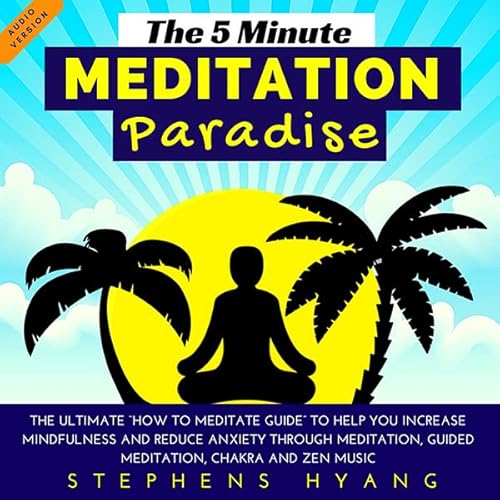
The 5 Minute Meditation Paradise
by Stephens Hyang · narrated by Robert Gazy · 6 hrs and 1 min
The Ultimate "How to Meditate Guide" to Help You Increase Mindfulness and Reduce Anxiety Through Meditation, Guided Meditation, Chakra, and Zen Music
Free vs. Paid: An Honest Breakdown
Free meditation content has never been more abundant. Most major apps offer free tiers with a basic course and a rotating selection of sessions; video platforms host thousands of free guided meditations; and simple timer apps cost nothing. For a disciplined beginner, free is genuinely enough to build a solid practice — the core techniques were free for two thousand years before subscriptions existed.
Paid subscriptions, typically running sixty to a hundred dollars a year, buy three things: complete structured courses, the full session library, and downloads. Whether that is worth it depends on a frank question — will you use it? A subscription that keeps you practicing daily is the cheapest mental-health investment available; one that auto-renews on an unused app is a donation. Use free trials fully, set a calendar reminder to decide before billing, and consider the annual plan only after a month of demonstrated consistency. Your practice, not the pricing page, should make the decision.
| What you get | Free options | Paid subscription | Audiobook program |
|---|---|---|---|
| Beginner course | Often partial | Full structured path | Complete sequential program |
| Session library | Rotating selection | Thousands of tracks | Fixed curated hours |
| Offline listening | Rarely | Yes | Yes, via download |
| Ongoing cost | None | Monthly or annual | One purchase, no subscription |
| New content | Limited | Added weekly | Fixed but replayable |
| Best for | Testing the waters | Variety seekers | Deep, focused listeners |
The Audiobook Alternative Nobody Mentions
There is a quieter option the app stores do not advertise: meditation audiobooks. These are full-length guided programs — often six to twelve hours — purchased once and owned forever, played through any audiobook app you already have. They offer something subscription libraries paradoxically lack: a deliberate, sequential journey designed by one author, where each session builds on the last instead of competing for your clicks.
For people overwhelmed by choice, this is a feature. The 5 Minute Meditation Paradise by Stephens Hyang, narrated by Robert Gazy, exemplifies the format: over six hours of guided mindfulness, chakra, and zen music sessions in five-minute blocks, moving from foundational breathing to deeper practices in a curated order. There is no algorithm, no upsell, no streak anxiety — just a calm voice and a well-planned path. Many practitioners use an audiobook program as their core curriculum and a free timer app for silent sits, a combination that costs almost nothing and covers everything.
Avoiding the App Traps
Meditation apps fail their users in predictable ways. The first trap is browsing instead of practicing: endless libraries invite the same scrolling restlessness you installed the app to escape. Set a rule — choosing a session counts as part of practice only if practice follows. The second trap is metric obsession, where streaks and minutes become the point and a broken streak triggers abandonment. Track lightly; the calendar serves the practice, never the reverse.
The third trap is phone adjacency: the same device that guides your session offers infinite distraction one swipe away, and a single notification can detonate twenty minutes of settling. Defenses are unglamorous but effective — do-not-disturb scheduled for practice time, downloads instead of streaming, and for the strong-willed, keeping the phone outside the room with only the timer running. The goal is a phone that serves meditation for ten minutes and is otherwise absent. Design for that explicitly, because the defaults are designed against it.
Making Your App Part of a Daily Habit
An app is a tool; the habit is the product. Anchor practice to an existing daily cue — after coffee, before lunch, in bed — and let the app's reminder reinforce rather than create the trigger. Queue tomorrow's session tonight so starting requires one tap. Use the shortest sessions as your floor: a five-minute day preserves the streak and the identity, and identity is what eventually makes practice automatic.
Review monthly with one question: is this app still serving the practice, or has the practice become serving the app? If you open it daily and leave calmer, renew without a thought. If you browse, compare, and rarely sit, simplify — a single structured program, audiobook or course, followed start to finish, will teach more than a year of grazing. The best meditation app, in the end, is the one that quietly makes itself unnecessary: the one that trains you until sitting down and breathing no longer requires an icon at all.
Audit an App Before Building Your Routine Around It
A meditation app is a service as well as a practice resource, so evaluate both sides. Check what you can use without paying, what requires a subscription, and whether the price changes after a trial. Read the current billing and cancellation terms in the store or service where you will subscribe. Do not assume that deleting the app ends a subscription. Look for a clearly described process for managing payment, and decide whether the available content is worth the ongoing cost to you. An attractive interface and a generous library are not enough if the access arrangement does not fit your budget or habits.
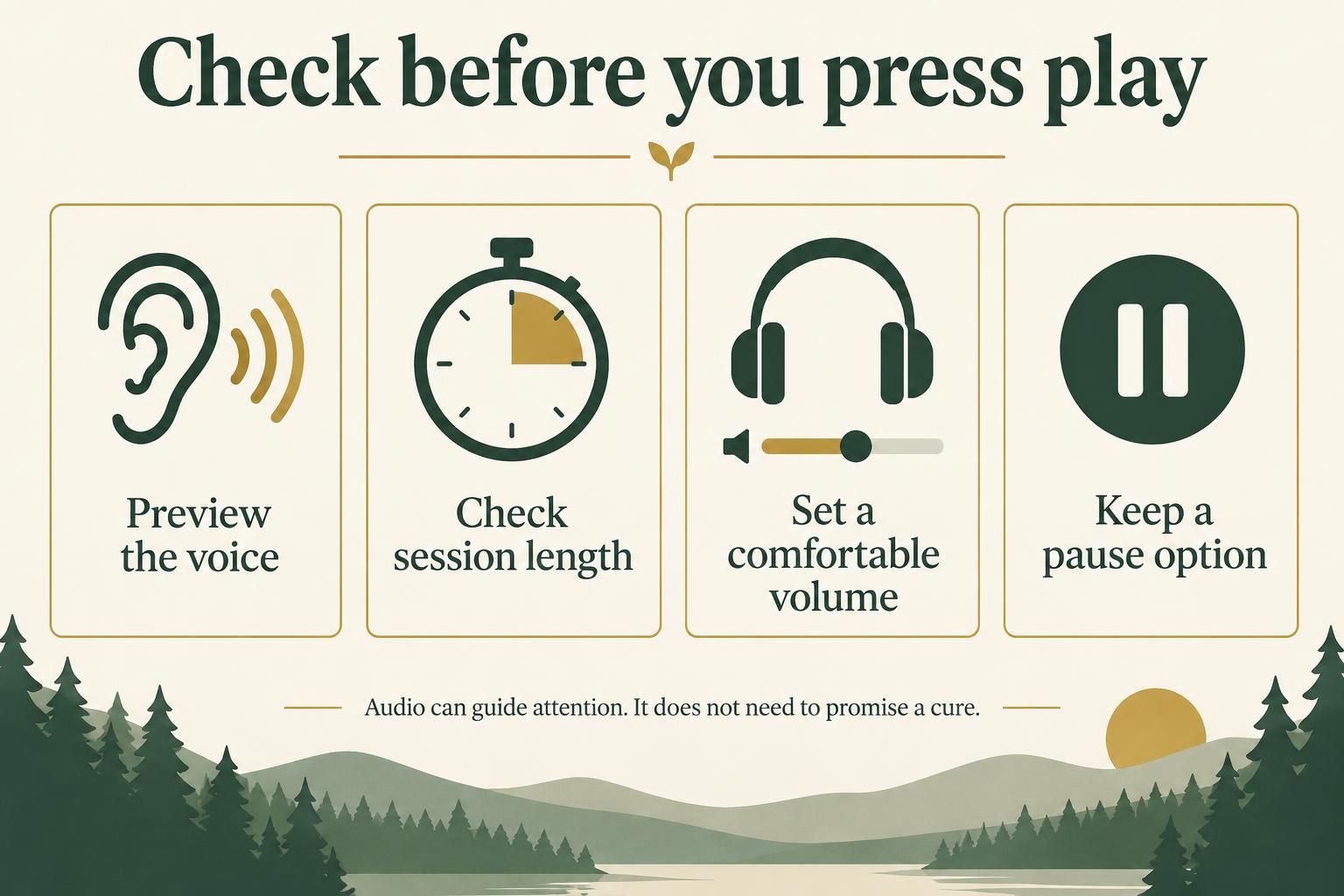
Check practical access next. Can you download sessions for offline listening? Does the app work on the device you actually use? Are transcripts, captions, or other accessibility options available? Can you pause easily and resume without losing your place? If you listen at night, can you prevent automatic playback of another session? These features affect daily usefulness more directly than a large advertised content count. Verify them in the current version rather than relying on an old review. Features, prices, and availability can change. A small collection you can reliably access may be more valuable than a large library you spend more time browsing than using.
Privacy also deserves attention. Review what information the app requests, whether account creation is necessary, and what the current privacy policy says about collection and sharing. A meditation journal or mood check-in can contain sensitive information even when it is entered casually. You do not have to record intimate details to benefit from guided practice. Use the least amount of data that supports your needs, and avoid assuming that a wellness label guarantees medical confidentiality. If you are unsure about a feature, skip it until you understand its purpose. The most useful app is not necessarily the one that asks you to document the most.
Test One Session Path Before Exploring the Whole Library
A large catalog can create a paradox: more choices make it harder to begin. Pick one beginner session or a short sequence that matches your aim, then repeat it several times before browsing widely. Notice whether the guide gives clear instructions, leaves usable pauses, and allows a comfortable pace. If the narration feels rushed or distracting, try another resource. You are evaluating the fit between the instruction and your attention, not awarding a universal score to the app. A famous teacher or polished production does not guarantee that a particular session will be the easiest one for you to practice.
Compare like with like. A sleep story is designed differently from a focused-attention session, and a breathing exercise may ask you to alter breathing rather than simply observe it. A music track can support relaxation without teaching meditation. Read the session description so that you know what activity is intended. If a recording promises a cure or a specific physiological transformation, treat that promise cautiously. General wellness content is not individualized treatment. For persistent symptoms, keep appropriate care in place and ask a qualified professional whether the proposed practice is suitable. Choosing a session by purpose is more useful than choosing solely by a soothing thumbnail.
Use a short practical review after a few sessions. Did you spend more time practicing than selecting? Could you hear the instructions comfortably? Did reminders help or add pressure? Did the session length fit your real schedule? The answers can guide a decision to keep the app, change your setup, or choose another format. You do not need a sophisticated scoring system. One or two factual notes are enough. The trial is successful when it gives you a clear understanding of what supports practice, even if the conclusion is that a simple timer and a familiar instruction work better for you.
When an Audiobook or Timer May Be the Better Tool
An audiobook can suit listeners who prefer a stable collection and fewer daily recommendations. The 5 Minute Meditation Paradise is one option to examine if you want meditation-themed audio in that format. Check the current Audible listing, sample, purchase conditions, and chapter organization before deciding. An audiobook is not automatically free of account requirements or access limits, and its title does not establish that every chapter is exactly five minutes. The useful comparison is practical: can you find a suitable passage quickly, return to it easily, and listen in the setting where you intend to practice? Choose according to that experience rather than assuming one format is inherently superior.
A timer may be enough if you already know a simple technique. Set a manageable interval, sit comfortably, and attend to a natural breath sensation, contact with the chair, or ordinary sound. When the mind wanders, return. This option removes browsing, subscription decisions, and much of the temptation to keep checking a screen. It also lacks the support of a narrator, which may matter for beginners or people who prefer ongoing guidance. There is no need to make the choice permanent. You can use an app on one day, an audiobook on another, and silence when it is convenient, provided you understand the practice you are doing.
Whatever tool you choose, keep a fallback that works without it. A brief eyes-open attention practice can remain available when the internet is down or a device is charging. The fallback protects the routine from becoming dependent on perfect access. It also puts the technology in its proper place: the tool helps organize practice, while you perform the action of attending and returning. If an app encourages endless optimization, consider simplifying. A modest, repeatable session is often a more useful outcome than collecting programs, preserving badges, or finding a new recommendation every time you want a moment of quiet.
Use Reminders and Streaks Without Letting Them Set Your Worth
A reminder can help when it arrives near a realistic practice cue. A notification at a time you are always in a meeting is more likely to become background noise. Adjust it to your schedule or turn it off if it adds irritation. Streaks can make consistency visible, but they are records of app activity, not complete measures of attention or wellbeing. You may practice without opening the app, pause during illness, or choose a different resource. A broken streak does not erase previous learning. Keep the feature only if it supports the habit you want rather than creating a rule you feel anxious about breaking.
Be especially careful with mood scores that invite you to expect improvement after every session. Feeling unchanged is possible, and feeling temporarily more aware of discomfort does not by itself establish whether the practice is useful. At the same time, increasing distress should not be dismissed as a necessary stage. Notice your experience, adapt when needed, and seek guidance if symptoms persist. The app cannot fully interpret your context. Let its prompts supply information rather than authority. Your routine should remain responsive to your life, not governed solely by the dashboard that a service has chosen to display.
A Practical Detail to Keep in Mind
Before renewing a subscription, review what you actually used. A large saved library can create an impression of value even when you return to only two sessions. Compare the cost and convenience with an audiobook, a free resource, or a timer that already meets your needs. Check current access terms before assuming that purchases and subscriptions behave the same way. The decision can remain practical rather than ideological: keep the app if it supports regular practice at an acceptable cost, and simplify if it mostly encourages browsing. Your attention routine does not need to preserve loyalty to a service when another arrangement works better.
Start listening today
The 5 Minute Meditation Paradise
by Stephens Hyang · narrated by Robert Gazy · 6 hrs and 1 min
The Ultimate "How to Meditate Guide" to Help You Increase Mindfulness and Reduce Anxiety Through Meditation, Guided Meditation, Chakra, and Zen Music
Frequently asked questions
Are meditation apps worth paying for?
They are worth it if you use them daily — a subscription that sustains a real practice is excellent value. Use the free trial fully, practice for a month, and subscribe only after consistency is proven. If you struggle with choice overload, a one-time audiobook program may serve you better than an endless library.
What is the best free meditation app?
The best free option depends on your needs: most major apps offer solid free tiers with beginner courses and sample sessions, and free timer apps cover self-directed practice completely. Try two or three free tiers for a week each and keep whichever voice and structure you actually return to.
Can a meditation app replace a teacher?
For foundational practice, largely yes — apps deliver clear instruction, structure, and guided experience that cover what most beginners need. A live teacher adds personalized feedback and help with unusual experiences, which matters more at intermediate and advanced stages or when difficulties arise.
How do I stop getting distracted by my phone during app meditation?
Schedule do-not-disturb for your practice time, download sessions for offline use, and queue the session before sitting down so no browsing is needed. If distraction persists, leave the phone across the room playing through a speaker, or use an audiobook program on a dedicated player.
What should I look for first when choosing a meditation app?
The narrator's voice. You will hear it for hundreds of minutes, and even small irritation ends subscriptions. After voice, check for short session options, a structured beginner course, offline downloads, and reminders — then audition two or three apps on free trials before deciding.
Choose one app or program, commit for thirty days, and let the habit outgrow the tool. If you want depth without a subscription, start with The 5 Minute Meditation Paradise — six hours of guided practice you own outright, one calm five-minute session at a time. The download is the easy part; tomorrow's five minutes is the practice.


